Electrical Troubleshooting & Diagnostics in Reno, Nevada
Electrical malfunctions in Reno properties can range from annoying inconveniences to severe fire hazards. In Northern and Southern Nevada alike, environmental stressors such as high-desert temperature swings, relentless summer thermal loads on air conditioning systems, and seasonal grid fluctuations create distinct failure modes in residential and commercial circuitry.
In Reno, common electrical fault symptoms include circuit breakers that trip repeatedly upon appliance startup, flickering light fixtures caused by loose neutral connections, dead wall outlets that fail to deliver power, and buzzing sounds emanating from switches or service panels. When dealing with complex branch circuits, casual DIY troubleshooting can be exceptionally dangerous. Line voltages of 120V and 240V possess lethal potential, and improper diagnostic probing can short-circuit delicate electronic control boards or cause severe arc flash injuries.
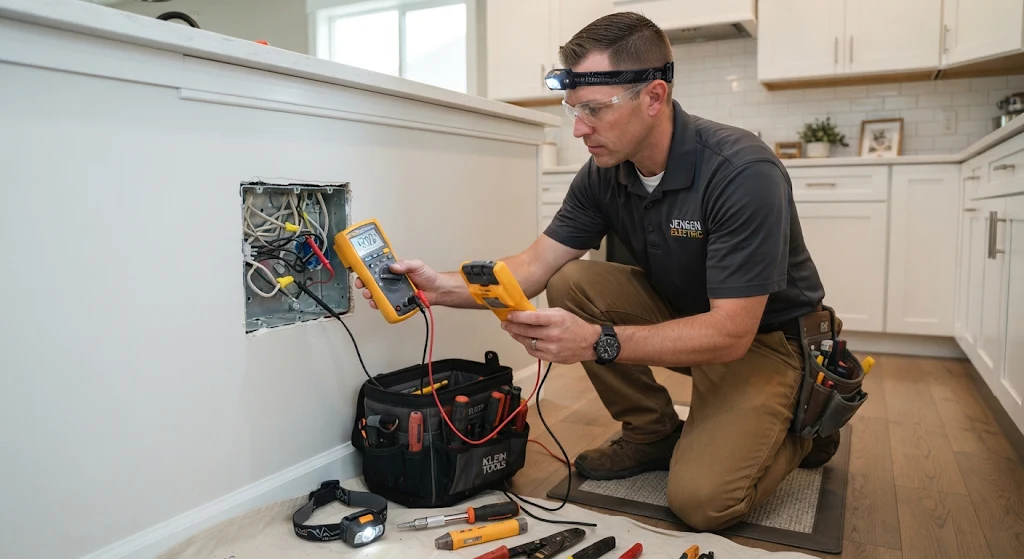
Independent contractors use calibrated digital multimeters and thermal imaging to pinpoint hidden electrical faults in Reno homes.
Systematic Fault Identification: Repair vs. Replacement
Professional electrical diagnostics performed by independent licensed contractors follow structured National Electrical Code (NEC) protocols. When a circuit breaker trips continuously, an independent technician does not merely replace the breaker with a higher-amperage unit—an illegal practice that creates severe fire hazards by overloading copper conductors. Instead, the technician conducts load measurements, tests for low-resistance ground faults, and assesses whether conductors have degraded due to excessive thermal cycling.
Key repair scenarios evaluated by independent technicians include:
- Thermal Degradation: Desert heat combined with heavy air conditioning loads often hardens wire insulation, causing micro-cracking and intermittent grounding issues in attics and exterior junction boxes.
- GFCI & AFCI Nuisance Tripping: Ground-Fault and Arc-Fault Circuit-Interrupter devices are critical life-safety mechanisms. Technicians isolate whether trips stem from a defective breaker, downstream equipment leakage, or genuine dangerous parallel arcing along branch conductors.
- Back-Stabbed Receptacle Failures: In older Reno subdivisions, push-in terminal receptacles frequently develop loose connections over time, leading to localized heating, scorching, and circuit failure. Contractors replace these with secure side-wired screw terminals.
- Main Neutral Failures: A compromised utility neutral conductor can cause voltage spikes on one leg of a residential panel while dropping voltage on the other, endangering expensive home electronics. Contractors coordinate with NV Energy to isolate utility-side issues from customer equipment faults.
The Diagnostic Workflow: From Symptoms to Resolution
When an independent contractor arrives at your Reno property, the diagnostic sequence begins with a visual inspection of the service equipment, looking for signs of oxidation, insect intrusion, moisture ingress, or unlisted replacement components. Using calibrated digital multimeters, technicians verify line-to-line, line-to-neutral, and neutral-to-ground voltages. Clamp-on ammeters measure operational load on each individual branch circuit under real-world household conditions.
Once the root cause is established, the contractor provides an upfront written estimate detailing whether a simple component repair, device replacement, or broader circuit rewiring is necessary to restore safe, code-compliant operation.
Looking for Qualified Electrical Repair in Reno?
Connect with participating independent licensed electrical contractors through the WATT911 Nevada referral desk. Contractors evaluate your site requirements, perform load calculations, and provide written estimates.
Safety Considerations & Contractor Independence in Reno
Homeowners facing electrical problems should never attempt hazardous internal repairs. If you detect burning odors, observe charred outlets, or hear persistent buzzing from breaker enclosures, shut down the affected circuit at the main panel immediately and seek professional diagnostic assessment.
WATT911 is a transparent lead-generation referral network connecting customers with independent local electrical contractors. We do not employ electricians, perform physical labor, or hold a Nevada contractor license. All diagnostic procedures, code evaluations, and physical repairs are executed solely by independent licensed contractors operating under their own Nevada State Contractors Board (NSCB) C-2 license. Independent contractors set their own diagnostic call fees and project estimates.
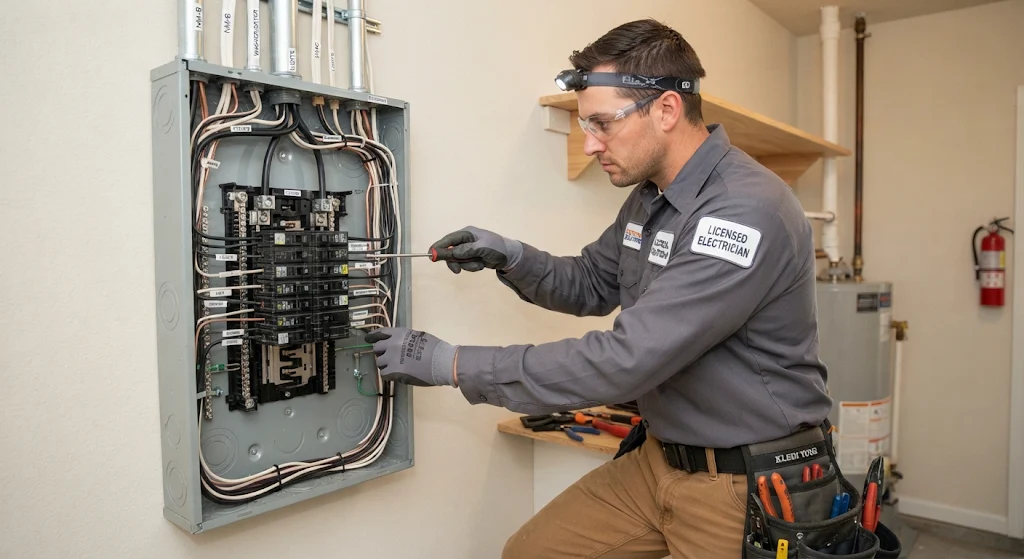
Comprehensive inspection of breaker panels verifies conductor torque specifications and thermal health.
Frequently Asked Questions
Breakers trip primarily due to circuit overloads (drawing more amperage than the conductor can safely handle), short circuits (hot wire contacting a neutral or ground), or ground faults. An independent contractor tests the circuit with calibrated meters to isolate the exact cause.
Never. Breaker size is dictated by the gauge of the circuit wiring (typically 14 AWG for 15A, 12 AWG for 20A). Upsizing a breaker without replacing the wiring creates an extreme fire hazard because the wire will overheat before the breaker trips.
No. WATT911 does not guarantee emergency response times or contractor availability. Participating contractors operate independently and manage their own emergency and regular service schedules.
If an outlet shows signs of discoloration, loose blade retention (plugs falling out), warmth to the touch, or erratic power delivery, it should be replaced immediately with a modern tamper-resistant commercial-grade receptacle.
Minor like-for-like repairs such as replacing a standard switch, outlet, or single breaker typically do not require permits. However, adding new circuits, replacing damaged main feeders, or altering panel configurations requires municipal permits and inspections.