Residential & Commercial EV Charger Installation in Henderson, Nevada
Electric vehicle adoption across Nevada continues to accelerate rapidly, driven by expanded vehicle availability, state clean energy initiatives, and the economic benefits of home charging. In Henderson, homeowners and commercial property managers are increasingly outfitting garages and parking facilities with dedicated Level 2 EV charging stations.
While standard 120-volt Level 1 charging cords included with vehicles only add 3 to 5 miles of driving range per hour of charging, a dedicated 240-volt Level 2 charging station delivers 25 to 50+ miles of range per hour, fully recharging an electric vehicle overnight. However, adding a continuous 32-amp to 48-amp continuous electrical load requires careful panel capacity verification and dedicated circuit installation.
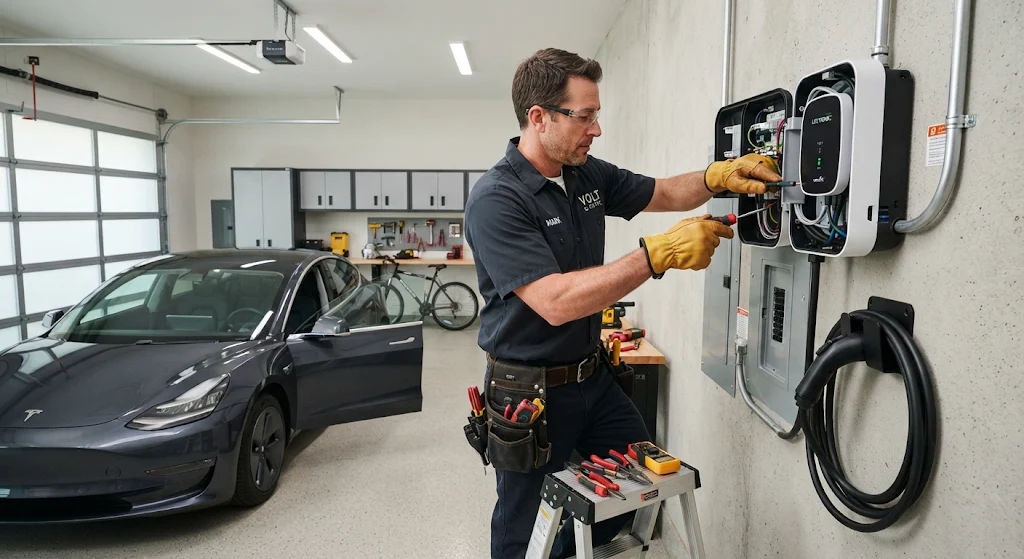
Independent electrical contractors install dedicated 240V circuits and verify electrical panel capacity for Level 2 EV charging in Henderson.
Continuous Duty Calculations, 240V Circuits & NEMA vs. Hardwire
Under the National Electrical Code (NEC Article 625), electric vehicle charging is classified as a "continuous load." This means branch circuits, conductors, and circuit breakers must be sized at 125% of the charger's maximum rated output. For example, a 48-amp Level 2 charger requires a dedicated 60-amp circuit breaker and heavy 6 AWG copper conductors.
Key technical decisions evaluated by independent contractors in Henderson include:
- Hardwired vs. NEMA 14-50 Receptacle: Hardwired installations allow maximum charging speeds (up to 48A or 11.5 kW), eliminate plug heat degradation, and avoid nuisance tripping on GFCI-protected breakers. Plug-in units (NEMA 14-50) are capped at 40A charging (on a 50A breaker) and legally require dedicated GFCI breaker protection under recent NEC codes.
- Panel Capacity & Article 220 Load Calculation: Before installation, the contractor calculates whether your existing 100A, 150A, or 200A service panel has sufficient capacity without risking whole-home breaker trips when air conditioning and charging operate simultaneously.
- Smart Energy Management: For panels with limited capacity, contractors can install dynamic smart load-management systems that throttle charger output if household consumption peaks, eliminating the immediate need for a costly utility service upgrade.
- Conduit Routing & Garage Safety: Running protective EMT or PVC conduit from the main panel to the charger location, properly securing wiring, and positioning charging cables safely away from walking paths.
Thermal Considerations & Charging Circuit Efficiency in Nevada
Charging an electric vehicle for six to ten hours continuously draws high amperage through circuit breakers, wiring terminals, and conductor splices. In hot Nevada garages, ambient temperatures can approach 120 degrees Fahrenheit. If connections are torqued incorrectly or terminal screws are loose, resistance heating increases exponentially, risking melted terminal blocks or premature breaker fatigue.
Independent contractors use calibrated digital torque screwdrivers compliant with manufacturer terminal specifications, verifying that all lugs are torqued to exact inch-pound ratings for maximum safety and sustained electrical efficiency.
Looking for Qualified EV Charger Installation in Henderson?
Connect with participating independent licensed electrical contractors through the WATT911 Nevada referral desk. Contractors evaluate your site requirements, perform load calculations, and provide written estimates.
Permits, Rebates & Network Disclosure in Henderson
Installing a dedicated 240-volt Level 2 charging circuit legally requires a building permit and certified inspection from the local municipal building department in Henderson. Furthermore, utility provider NV Energy offers residential EV charging rate discounts and potential equipment rebates that require certified contractor installation sign-offs.
WATT911 is an independent referral network connecting consumers with independent local electrical contractors. We do not sell chargers, employ electricians, or hold a Nevada contractor license. Independent contractors evaluate your service panel, pull required municipal permits, install dedicated circuits, and ensure full compliance under their own NSCB C-2 license.
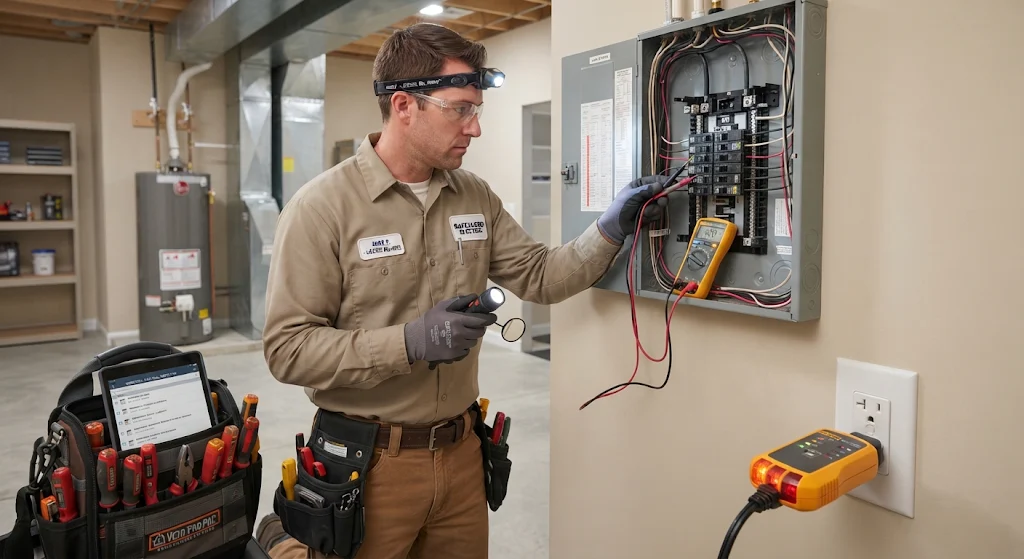
Professional hardwired EV charger installations deliver reliable, high-speed charging while protecting residential electrical panels in Henderson.
Frequently Asked Questions
Most homes can support a Level 2 charger, but homes with older 100-amp panels may require an electrical panel upgrade or a smart load-management device to prevent panel overloads when other major appliances operate.
A hardwired charger connects directly to the electrical box, supports higher charging rates (up to 48A on a 60A breaker), and avoids GFCI breaker nuisance tripping. A NEMA 14-50 plug-in is limited to 40A charging (on a 50A breaker) and requires a GFCI breaker.
Yes. Adding a dedicated 240-volt branch circuit for an EV charger requires an electrical permit and inspection from the local municipal building department.
Yes. NV Energy offers Time-of-Use (TOU) rate plans and EV charging incentives that provide lower electric rates during off-peak overnight hours.
Most standard garage installations take approximately 3 to 5 hours, depending on the distance between your main electrical panel and the desired charger location.